
Therapists for Anxiety: How Talking to Someone Could Help You Move Forward
Anxiety, worry and feeling overwhelmed can affect people in many different ways.
For some people, it can feel like their mind simply won’t switch off. You may find yourself replaying conversations, worrying about what might happen next or questioning decisions you’ve already made.
For others, it can show up as feeling tense, unsettled or overwhelmed by situations that once felt manageable.
If some of this sounds familiar, you may have found yourself searching online for therapists for anxiety and wondering whether speaking to a counsellor could be right for you.
Taking that first step can feel daunting, especially if you’ve never experienced counselling before.
At Look Forward Therapy, I offer a warm, confidential and non-judgemental space where you can talk openly about what’s happening in your life, explore how you’re feeling and begin to understand yourself and your experiences more clearly.
You don’t need to arrive with all the answers.
Sometimes, the first step is simply having someone to talk to.
What Can Anxiety and Worry Feel Like?
Everyone experiences worry, nervousness or uncertainty from time to time.
It might happen before an important meeting, during changes in a relationship, when starting a new job or while dealing with uncertainty about the future.
Sometimes, however, those feelings can become difficult to switch off and begin affecting everyday life.
You might recognise experiences such as:
- Constantly worrying about what might happen
- Overthinking situations and conversations
- Finding it difficult to relax or switch off
- Feeling restless, tense or on edge
- Avoiding situations because they make you uncomfortable
- Struggling with confidence or self-belief
- Feeling overwhelmed by work, relationships or responsibilities
- Finding uncertainty or change particularly difficult
- Feeling stuck in repetitive patterns of thinking
- Worrying about things that are outside your control
- Feeling that you’re simply not yourself
There doesn’t always have to be an obvious reason why you’re feeling this way.
Sometimes people seek counselling following a particular event or difficult period in their lives. Others simply recognise that something doesn’t feel right and would like a safe place to explore it.
Both are perfectly valid reasons to talk to someone.
How Can Therapists for Anxiety Support You?
When people search for therapists for anxiety, they sometimes imagine counselling will involve somebody analysing them or telling them what they should do.
That’s not how I approach counselling.
Therapy can provide you with dedicated time and space to talk openly about your thoughts, feelings and experiences with someone whose role is to listen without judgement.
Rather than telling you how you should feel or what decisions you should make, our conversations can give you an opportunity to explore what’s happening in your life and develop a greater understanding of yourself.
Everyone is different.
Your experiences, relationships, pressures and reasons for considering counselling are personal to you.
That’s why I believe counselling should be personal too.
1. Having Somewhere You Can Talk Openly
It isn’t always easy to tell the people closest to us how we’re really feeling.
You might worry that they won’t understand.
You may not want to burden them with your problems.
Perhaps you’ve tried explaining how you feel before and struggled to find the right words.
Or maybe you’re normally the person everyone else turns to, and you’re not used to being the one asking for support.
Counselling gives you a dedicated space where the conversation can be about you.
You can talk openly without worrying about being judged or having to protect somebody else’s feelings.
2. Exploring What’s Behind Your Worries
Sometimes we know exactly what’s making us anxious or worried.
Other times, we don’t.
You might simply know that something doesn’t feel right.
Counselling provides an opportunity to explore your thoughts and experiences at your own pace.
Over time, conversations may help you notice patterns, situations or experiences that you hadn’t previously connected with how you’re feeling.
Understanding ourselves more clearly can be an important part of deciding how we would like to move forward.
3. Understanding Patterns in Your Thinking
Have you ever replayed a conversation over and over?
Or found yourself imagining everything that could possibly go wrong?
Perhaps you frequently question decisions after you’ve made them or worry about what other people think of you.
Many of us develop patterns of thinking and responding without necessarily noticing them.
Counselling can provide a space to explore these patterns and consider how they affect your feelings, choices and relationships.
The aim isn’t to tell you what you should think.
It’s to help you become more aware of your own thoughts and responses.
4. Talking Without Feeling Judged
One of the most important parts of counselling is having a relationship where you feel able to be yourself.
There is no expectation that you should have everything figured out.
You don’t have to pretend everything is fine.
And you don’t have to know exactly what you want to talk about before your session begins.
At Look Forward Therapy, my approach is warm, empathetic and down-to-earth.
We can start wherever feels comfortable for you.
5. Building Greater Self-Awareness
Counselling isn’t necessarily about changing who you are.
Sometimes it’s about understanding yourself better.
Through talking and reflection, you may begin to recognise what situations affect you, what matters most to you and how previous experiences may influence how you respond today.
This greater self-awareness can give you more opportunity to make choices that feel right for you.
6. Creating Space Away From Everyday Pressures
Modern life can be incredibly busy.
Work.
Relationships.
Family.
Money.
Social media.
Responsibilities.
Expectations.
Sometimes there is very little opportunity to stop and think about how we’re actually feeling.
A counselling session creates dedicated time for you.
For that period, you don’t have to solve somebody else’s problem or meet somebody else’s expectations.
You can simply talk about what’s happening for you.
7. Looking Forward
Understanding the past can sometimes be important, but counselling doesn’t necessarily mean spending every session looking backwards.
For many people, it’s also about considering where they are now and where they would like to go next.
That might involve exploring confidence, relationships, boundaries, personal goals, changes you’d like to make or simply what you want the next stage of your life to look like.
At Look Forward Therapy, the emphasis is not only on understanding what’s happened, but also on helping you explore how you’d like to move forward.
You Don’t Have to Wait Until Things Feel Unmanageable
There’s a common misconception that counselling is only for people who have reached a crisis point.
It isn’t.
People decide to talk to a counsellor for many different reasons.
You might be experiencing a stressful period at work.
You may be going through changes within a relationship or family.
You could be dealing with bereavement or loss.
Perhaps your confidence has taken a knock.
Maybe you’ve reached a point in your life where you’re questioning what happens next.
Or you might simply find yourself thinking:
“I don’t feel like myself at the moment.”
You don’t need to wait for things to become overwhelming before considering counselling.
Sometimes wanting to understand yourself and how you’re feeling is reason enough.
Finding the Right Therapist for Anxiety
Searching online for therapists for anxiety can produce a huge number of results.
Choosing between them can feel overwhelming in itself.
Professional qualifications and memberships are important, but there’s another factor that matters too:
Do you feel comfortable talking to this person?
Counselling can involve discussing personal thoughts, feelings and experiences, so finding someone with whom you feel safe, respected and able to speak openly is important.
When looking for a therapist, you may want to consider:
Do I feel comfortable with their approach?
Read about the counsellor and how they work. Their personality and approach should feel like something you could potentially connect with.
Are their professional credentials clear?
A counsellor should be transparent about their qualifications, memberships and professional standing.
Do they offer sessions in a way that suits me?
Some people prefer traditional face-to-face counselling.
Others prefer online or telephone sessions.
And some people find talking while walking outdoors more natural.
Can I ask questions before starting?
Absolutely.
It’s reasonable to want to understand how counselling works before deciding whether you’d like to begin.
Finding the right counsellor is a personal decision.
You don’t need to rush it.
Flexible Counselling at Look Forward Therapy
Not everybody wants to experience counselling in exactly the same way.
That’s why Look Forward Therapy provides different ways for you to access counselling.
In-Person Counselling in Chelmsford
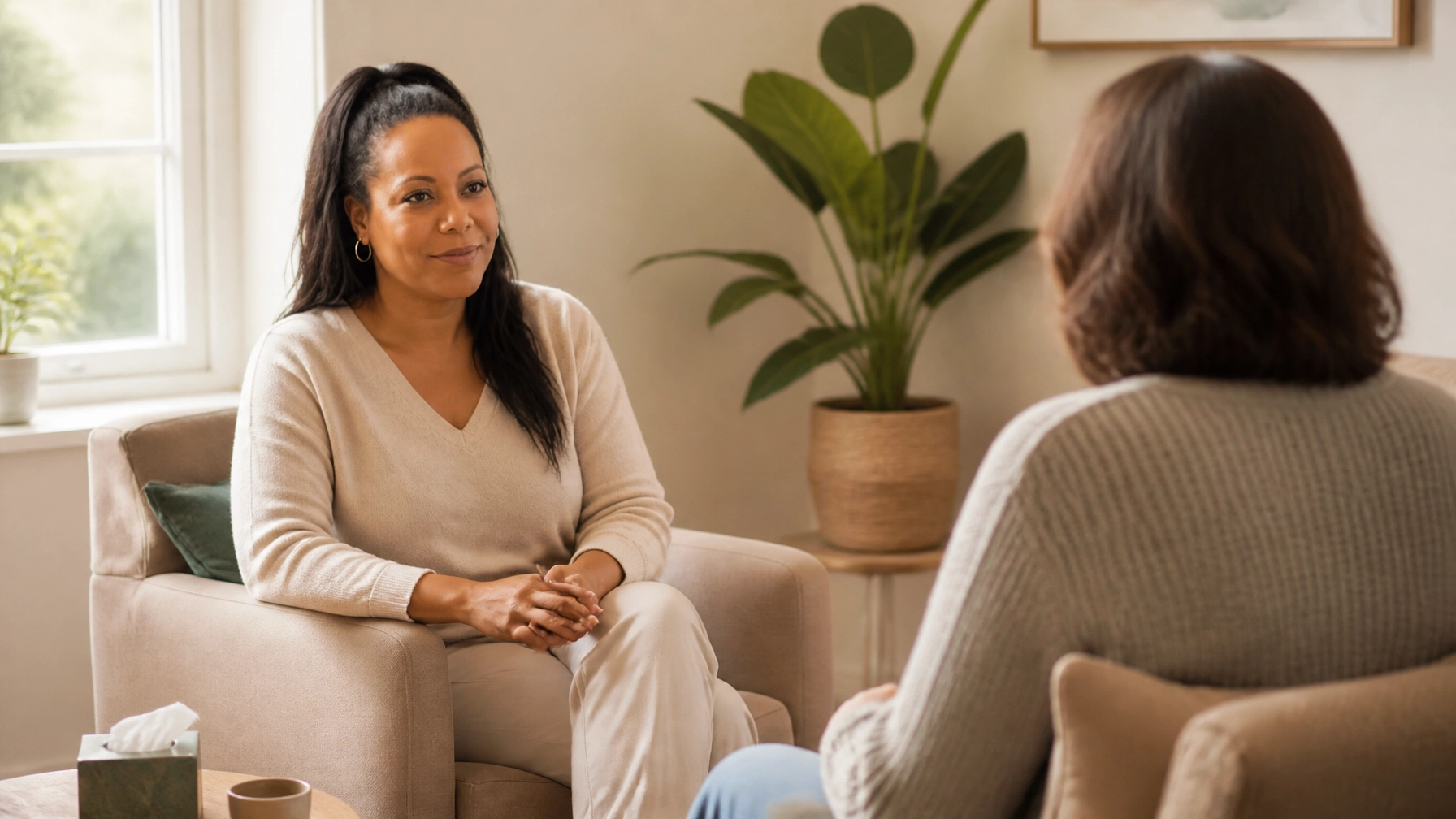
If you prefer sitting down and talking face-to-face, I offer counselling sessions in Chelmsford, Essex.
Having a dedicated space away from home and work can provide an opportunity to focus on yourself and what you’d like to discuss.
Online Counselling
Online counselling provides additional flexibility and allows you to attend sessions from a private place where you feel comfortable.
This may be particularly useful if travelling to appointments is difficult, you have a busy schedule or you simply prefer talking from familiar surroundings.
Telephone Counselling
Not everyone feels comfortable sitting face-to-face or appearing on camera.
Telephone counselling provides another way to talk privately and may feel more natural for some people.
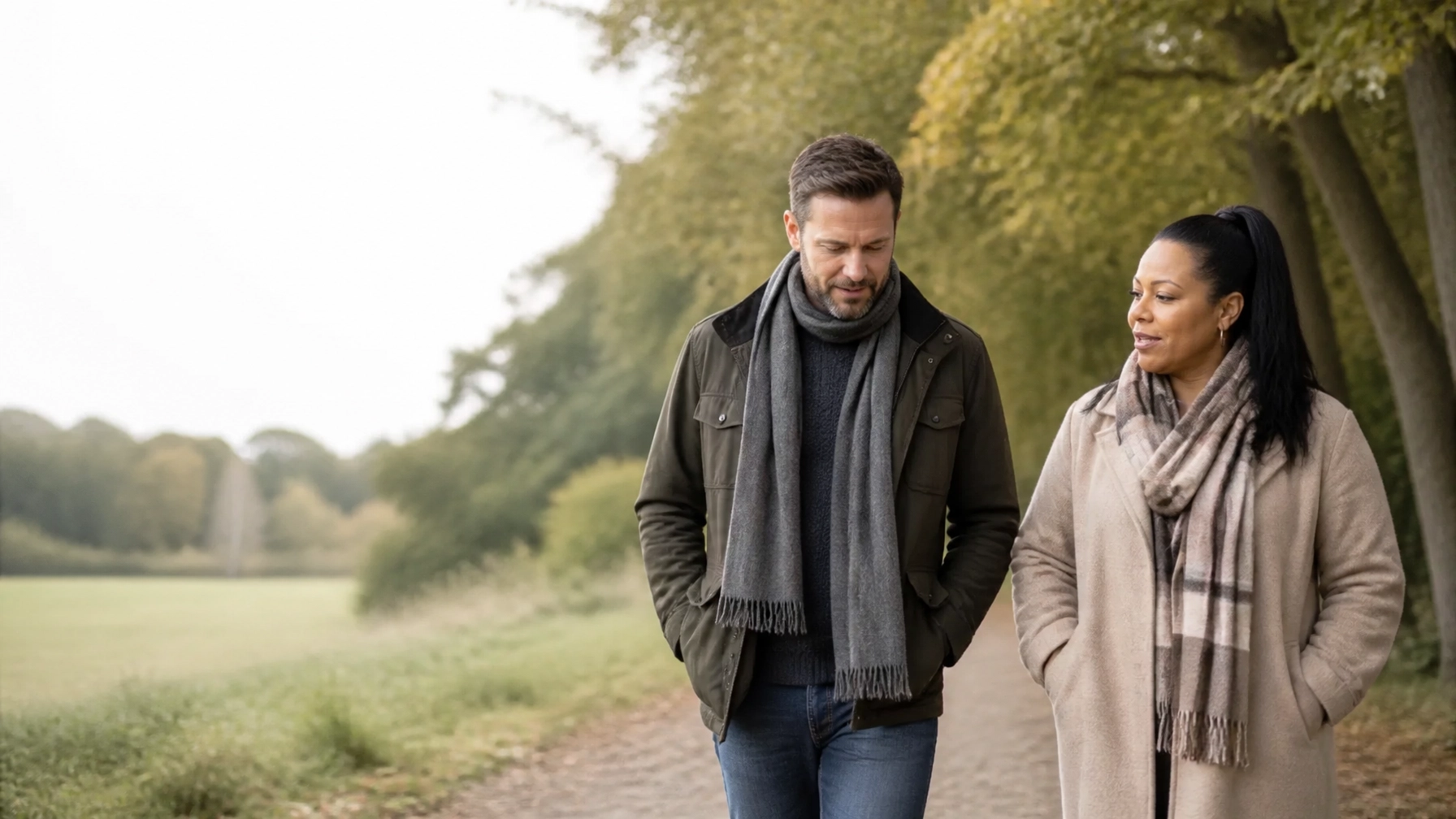
Walk and Talk Therapy
For some people, sitting opposite someone in a counselling room doesn’t feel natural.
Walk and Talk Therapy offers an alternative.
Rather than sitting in a traditional counselling environment, we walk and talk outdoors.
Some people find that walking side-by-side makes conversation feel more relaxed and informal.
What Happens During Your First Counselling Session?
If you’ve never spoken to a counsellor before, it’s completely understandable to wonder what your first session will be like.
You won’t be expected to arrive and immediately tell your entire life story.
And there isn’t a test.
The first session gives us an opportunity to begin getting to know each other and for you to talk about what has brought you to counselling.
You might already know exactly what you want to discuss.
Or you may simply know that you haven’t been feeling like yourself lately.
Either is fine.
You can talk about as much or as little as feels comfortable.
Counselling can then develop at a pace that feels right for you.
About Carla Harnell and Look Forward Therapy
I’m Carla Harnell, a professionally trained counsellor based in Chelmsford, Essex.
I created Look Forward Therapy to provide a warm, confidential and supportive environment where people can talk openly without judgement, pressure or expectation.
I am a Member of the Complementary Medical Association (CMA) and an Accredited Member of the Accrediting Board of Counsellors and Psychotherapists (ABCAP).
My professional memberships form part of my commitment to practising responsibly and maintaining appropriate professional and ethical standards within my work.
I work with people experiencing a variety of personal and emotional challenges, including:
- Anxiety and worry
- Stress and feeling overwhelmed
- Bereavement and loss
- Low mood
- Confidence and self-worth
- Feeling stuck or lacking direction
- Life changes and transitions
- Relationship and personal difficulties
- Men’s mental health
Where appropriate, I can also incorporate elements of coaching into our conversations, particularly when you want to explore personal development, practical steps or future goals.
Most importantly, counselling with me is about you.
Your experiences.
Your feelings.
Your pace.
And where you would like to go next.
Looking for Therapists for Anxiety in Chelmsford?
If you’ve found this page because you’ve been searching for therapists for anxiety, anxiety counselling in Chelmsford or simply someone you can talk to, you don’t need to have everything figured out before making contact.
You don’t need to know exactly why you’re feeling the way you do.
You don’t need to prepare what you’re going to say.
And you don’t need to decide immediately whether counselling is right for you.
Sometimes it can begin with a simple conversation.
At Look Forward Therapy, you’ll be given the space to talk, reflect and explore what’s happening for you at a pace that feels comfortable.
Ready to Take the First Step?
Reaching out to a counsellor can feel like a big decision, particularly if you’ve never experienced counselling before.
If you’d like to learn more about counselling with Look Forward Therapy, or you’d simply like to ask a question before arranging your first session, you’re welcome to get in touch.
Look Forward Therapy – Chelmsford, Essex
In-person | Online | Telephone | Walk and Talk Therapy
Important Information
Counselling is not a substitute for medical assessment, diagnosis, treatment or emergency mental health care.
If you’re concerned about your mental or physical health, please speak to your GP or another appropriately qualified healthcare professional.
If you or someone else is in immediate danger or requires urgent assistance, contact the emergency services.

1. How can therapists for anxiety support me?
Therapists for anxiety can provide a safe, confidential space to explore your thoughts, worries and experiences without judgement. Counselling can help you better understand how you are feeling and explore ways of moving forward that feel right for you.
2. How do I choose the right therapists for anxiety?
When looking for therapists for anxiety, consider their professional credentials, approach to counselling and whether you feel comfortable talking to them. Finding a therapist with whom you feel safe, respected and able to speak openly can be an important part of the counselling relationship.
3. Can I see a therapist for anxiety in Chelmsford?
Yes. Look Forward Therapy offers in-person counselling in Chelmsford, Essex, as well as online, telephone and Walk and Talk therapy, providing different options depending on how you feel most comfortable talking.
4. What happens during my first session with a therapist for anxiety?
Your first session is an opportunity to get to know your counsellor, discuss what has brought you to counselling and ask questions about how the process works. You don't need to arrive knowing exactly what you want to say.
5. Do therapists for anxiety offer online counselling?
Some therapists for anxiety provide online sessions. Look Forward Therapy offers video and telephone counselling alongside face-to-face sessions, giving you flexibility over how you access counselling.